System engineer/work package manager
Vacature
- Leiden
- MSc
- Fulltime
Max € 5.241,00 gross per month



Max € 5.241,00 gross per month
Are you excited about working in a high-tech environment where your systems engineering and management skills help advance cutting-edge space science? Would you like to contribute to the definition, development, and delivery of innovative scientific instruments for space missions and ground-based observatories? Do you enjoy bringing together people, technology, and project objectives to turn complex challenges into successful outcomes? Then we would love to meet you!

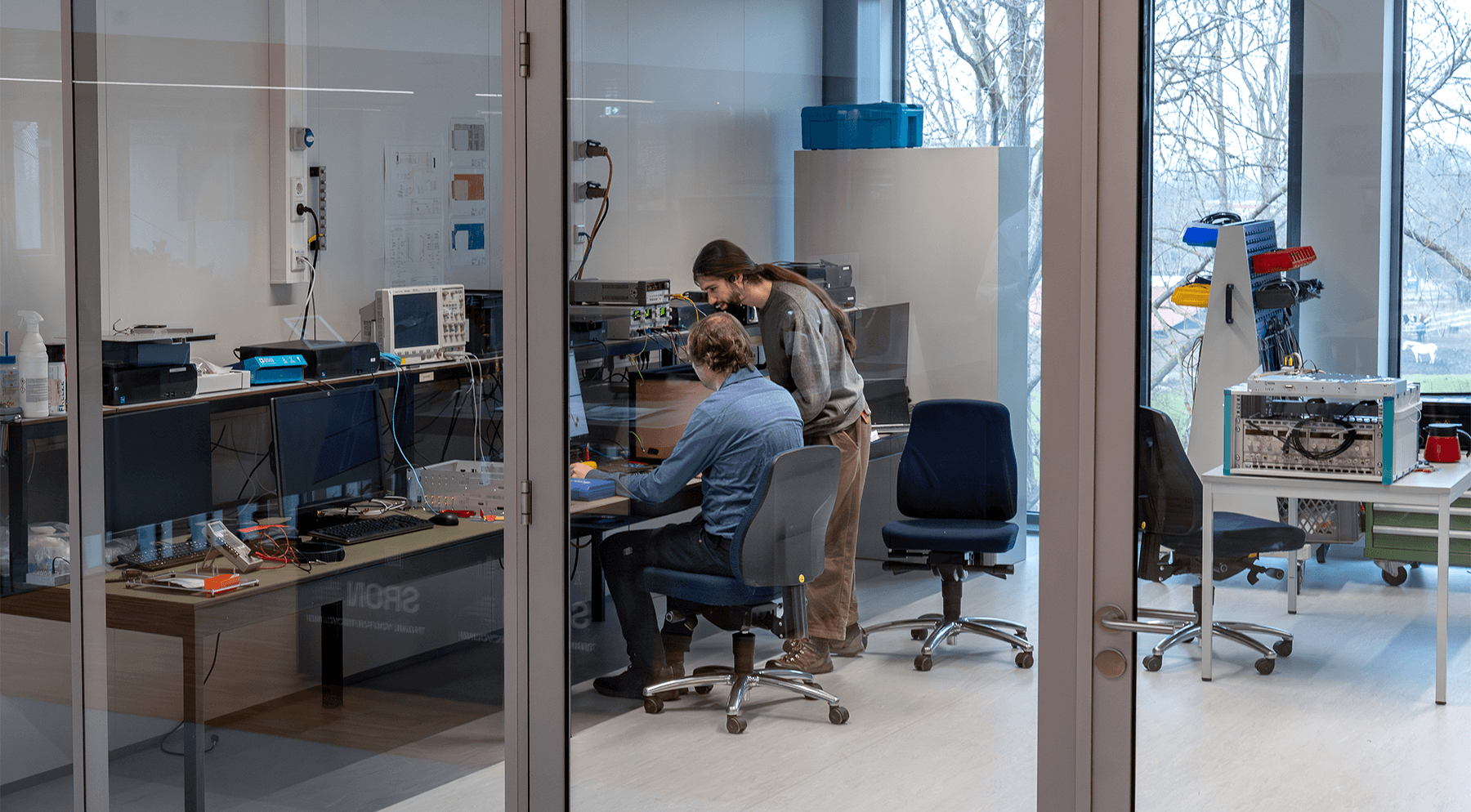
You will contribute to one or more of SRON's current and future instrumentation projects, depending on project needs and your expertise. These may include LISA, NewAthena, PRIMA, and NEBULA-Xplorer, and you may work on several projects simultaneously. You will help translate scientific objectives into technical solutions, ensuring that complex systems and their components meet the mission's requirements.
Your responsibilities will include systems engineering activities, requirements management, and the planning, coordination, and monitoring of work packages. Depending on the project, you may also lead a team of engineers, creating conditions for them to excel and deliver high-quality results.
You will work closely with specialists across disciplines to coordinate technical interfaces, manage dependencies, and monitor deliverables and project progress. As part of the NEBULA-Xplorer project, SRON also engages students from Dutch educational institutions, and you will likely contribute to supporting and guiding these students in their work. You will report to the Lead Systems Engineer on systems engineering matters and work closely with the Project Manager to monitor deliverables, schedules, risks, and costs. Your responsibilities will grow as you gain experience. You will receive guidance and coaching from the Lead Systems Engineer and Project Manager, helping you develop your expertise and gradually take on greater responsibility.
In this role, you will connect technical excellence with effective project execution, helping transform ambitious scientific goals into successful space instrumentation.
This vacancy is part of the Systems Engineering and Electronics Section within the Engineering Group (EG). Working in the EG at a space institute is a unique and rewarding experience. In many engineering industries, commercial pressures mean that at some point a design is good enough, it goes out the door, and improvements can come later. Space engineering is different. When it goes into space, it simply must work.
This creates a special environment for engineers and other technical staff. We face with nearly impossible puzzles and are given the opportunity to really solve them: to design, build, test, learn, improve and design again until we get it right. That challenge brings enormous job satisfaction, and it is why you will find such a passionate and motivated engineering team at SRON.
You will join a team of five systems engineers and three project leaders/work package managers, who all work on different projects, from initial prototypes for future missions to complete scientific observatories with a set launch date.
Primarily, you will contribute to future instruments for astrophysical observatories such as LISA, NewAthena, PRIMA, and/or NEBULA-Xplorer, enabling scientists worldwide to perform groundbreaking research on the universe.
This position is particularly suited to university graduates or early-career professionals who are eager to develop their expertise and build a career in space systems engineering, with opportunities to grow into more senior roles in future space missions.
Ideally you have a master's degree in aerospace engineering or similar and are comfortable working in multidisciplinary teams. Some experience with complex technical systems, preferably space systems, is desirable. Familiarity with Model-Based Systems Engineering (MBSE) is an advantage. Knowledge of or experience with European Cooperation for Space Standardization (ECSS) standards, particularly those relating to systems engineering and project management, is a strong plus.
You will be employed by NWO-I (the Institutes Organisation of the Dutch Research Council) on a temporary contract for a minimum of two years. We offer a full-time position. Under the NWO-I classification, your initial formal job title will be Design Engineer A, corresponding to salary scale 9. The position is based at SRON in Leiden.
NWO-I has good secondary employment conditions such as:
Space Research Organisation Netherlands (SRON) enables breakthroughs in international space science. We develop technology and instruments for missions of the future and conduct research in the fields of astrophysics and atmospheric sciences. SRON works closely with leading international partners such as ESA, NASA and JAXA, as well as with companies from the space and high-tech industry. We support Dutch and international researchers in participating in space missions and in the effective use of mission data. As the national institute for space research, SRON coordinates the Netherlands’ participation in ESA’s science programme and collaborates closely with Dutch universities, other NWO institutes, industry partners and government agencies to advance a cohesive national agenda for space-based research.
At SRON, we believe that a diverse workforce in terms of gender, age and cultural background is essential for conducting excellent research. We therefore encourage all qualified candidates to apply.
Online interviews and online screening may be part of the selection procedure.