PhD student in experimental astronomy
Vacature
- Leiden
- MSc
- Fulltime
Max 42.645,- per year



Max 42.645,- per year
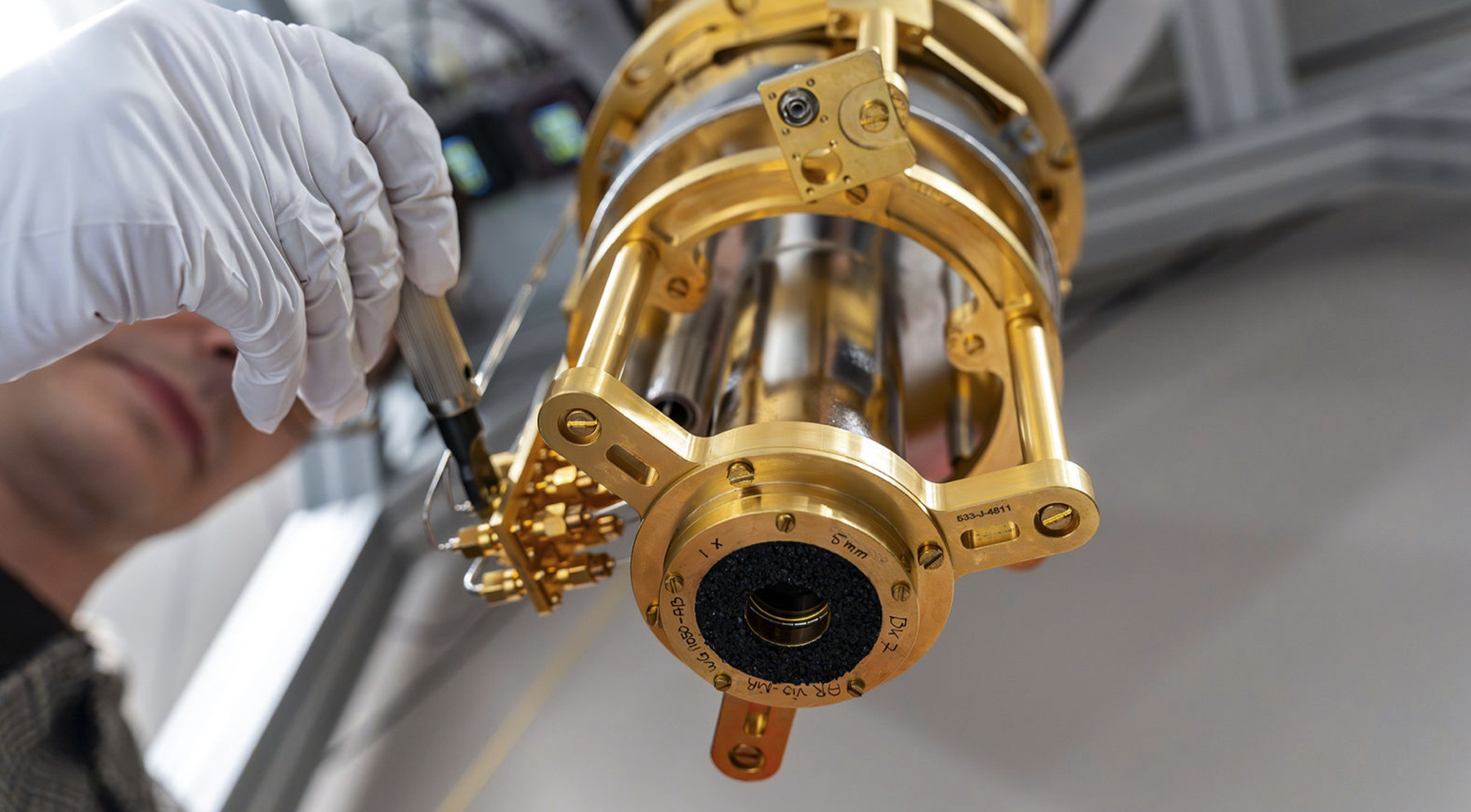
At SRON (Space Research Organisation Netherlands) we combine a high level of space science with development and engineering of the next generation space instruments. You will work on highly sensitive cryogenic detectors, with the ultimate goal to characterize the atmospheres of Earth-like exoplanets. These observations can only be done from space, and require a new generation of detectors. Your research will lead to the most sensitive and efficient detector to date, by combining the application-driven requirements with a strong curiosity about the fundamental physical principles of the detector.

The Technology Science Group of SRON closely collaborates with the Experimental Astronomy group at Delft University of Technology. Together we form a diverse group with various backgrounds, working on detectors and instrumentation for astronomy from the terahertz to the visible part of the spectrum. You will work part of your time at both institutes, dependent on the phase and needs of the project. In this project, which is funded by an ERC Consolidator grant, several scientists and engineers will work together on an extremely sensitive and efficient detector, which we will develop for characterization of Earth-like exoplanets.
You will design and evaluate Microwave Kinetic Inductance Detectors (MKIDs), which are superconducting single photon detectors. Superconducting detectors can detect each individual photon and determine its energy. The energy information allows to take a spectrum without dispersive optics and to distinguish wanted signal from dark excitations. Therefore, these detectors can have truly zero dark current, in contrast to commonly used semiconductor cameras. These properties make them a strong detector candidate for the characterization of Earth-like exoplanets, which are very faint, and to answer the question whether these planets host life.
This project particularly focusses on the demonstration of the MKID specifications that are required to characterize exoplanets from space, for which this detector technology needs to be pushed to its fundamental limits. We will hire 2 PhD students in this project who will work together towards this goal. One PhD will focus more on the condensed matter aspects of the detector sensitivity, and the second PhD more on detector efficiency and the demonstration of larger arrays. These separate aspects will lead to separate PhD theses, but there will be a close collaboration in detector designs, measurements and data analysis. The work involves electromagnetic design and simulation, optical design, detector physics, cryogenic experiments and signal analysis.
We are looking for 2 excellent candidates with an MSc degree in (Applied) Physics, Electrical Engineering or a related field, with a strong interest in detector technology and (space) instrumentation. Experience in simulation, design and experimental evaluation of superconducting detectors is considered advantageous but not required. We expect good verbal and written communication skills, as well as the ability to function in a multi-disciplinary team of scientists and engineers.
The positions we offer at SRON are full-time positions in which you will be employed by NWO-I (The Netherlands Organization for Scientific Research Institutes) and will initially be for a period of 1,5 years. After a satisfactory performance evaluation, this employment will be extended with 2,5 more years. The salary will be in accordance with the salary scales of NWO-I, starting with €3.115,- in the 1st year of employment. Compensation for commuting expenses will be provided.
NWO has good secondary employment conditions such as:
Space Research Organisation Netherlands (SRON) enables breakthroughs in international space science. We develop technology and instruments for missions of the future and conduct research in the fields of astrophysics and atmospheric sciences. SRON works closely with leading international partners such as ESA, NASA and JAXA, as well as with companies from the space and high-tech industry. We support Dutch and international researchers in participating in space missions and in the effective use of mission data. As the national institute for space research, SRON coordinates the Netherlands’ participation in ESA’s science programme and collaborates closely with Dutch universities, other NWO institutes, industry partners and government agencies to advance a cohesive national agenda for space-based research.
At SRON, we believe that a diverse workforce in terms of gender, age and cultural background is essential for conducting excellent research. We therefore encourage all qualified candidates to apply.